Reviews of the Western Digital WD1600LB Hard Drive. Western Digital WD1600LB—a storage device that belongs to a specific era and occupies a distinct position in the market. Whether this is a brand-new mainstream drive or a decades-old retro component, our goal remains the same: to evaluate it fairly within its intended context. We will examine its physical specifications, interface compatibility, real-world transfer performance, acoustic behavior, thermal output, and long-term reliability considerations.
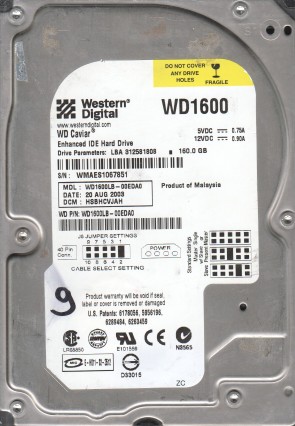
The Western Digital WD1600LB is a 160GB 3.5-inch internal hard drive designed primarily for use in desktop computers and entry-level storage applications. It employs a traditional magnetic recording (CMR) technology with a 5400 RPM spindle speed, positioning it as a budget-friendly solution for basic data storage rather than high-performance computing. This drive targets users who require reliable, low-cost secondary storage for documents, media files, or legacy system upgrades.
Core specifications include a 160GB capacity, SATA 3.0Gb/s interface, 2MB cache buffer, and an average seek time of approximately 8.9ms. The drive operates at 5400 RPM and features a single platter design, which contributes to its relatively quiet operation and low power consumption—typically around 5.4W during read/write and 4.2W at idle. Its physical dimensions are standard for 3.5-inch drives: 147mm x 101.6mm x 26.1mm, with a weight of approximately 0.5 kg.
In terms of performance, the WD1600LB delivers sequential read and write speeds of approximately 80-90 MB/s under optimal conditions, which is modest by modern standards. Random access performance is adequate for lightweight tasks but degrades noticeably when handling multiple simultaneous file operations. The drive is not suitable for demanding applications such as video editing or large database management, as its low RPM and small cache limit throughput and responsiveness.
A key advantage of this model is its reliability and longevity in low-stress environments. Western Digital’s reputation for robust construction is reflected here, with many units operating for years in archival or secondary storage roles. It also produces minimal noise and vibration, making it suitable for silent PC builds. However, its primary drawbacks include limited capacity, slow transfer rates, and obsolete interface compatibility with modern SATA 6Gb/s systems, though it remains backward-compatible.
This drive is best suited for users who need a cost-effective solution for storing infrequently accessed data, such as backup archives, music libraries, or old documents. It also works well as a secondary drive in older desktop systems where speed is not critical. It is not recommended for operating system installation, gaming, or any workload requiring rapid data access or high IOPS.
For purchase consideration, the WD1600LB is most appealing to budget-conscious buyers or those refurbishing vintage computers. Buyers should verify compatibility with their system’s SATA generation, as this drive uses a 3Gb/s link. New units may be difficult to find in mainstream retail, but used or refurbished drives remain available through specialized sellers at very low prices. Given its limitations, it is generally advisable to invest in a modern 1TB or larger 7200 RPM drive for better performance per dollar unless specific legacy requirements exist.