Reviews of the Seagate ST33232A Hard Drive. Seagate ST33232A—a storage device that belongs to a specific era and occupies a distinct position in the market. Whether this is a brand-new mainstream drive or a decades-old retro component, our goal remains the same: to evaluate it fairly within its intended context. We will examine its physical specifications, interface compatibility, real-world transfer performance, acoustic behavior, thermal output, and long-term reliability considerations.
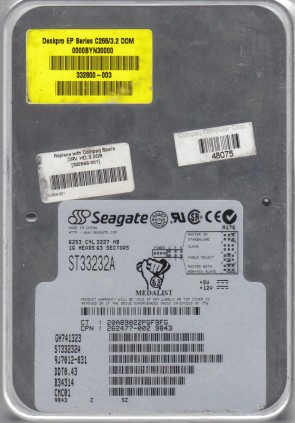
The Seagate ST33232A is a hard disk drive from the late 1990s, specifically a 3.2GB capacity model using the Ultra ATA/66 interface. It was designed as a mainstream storage solution for desktop personal computers of that era, targeting users needing a reliable internal drive for operating systems, applications, and personal file storage.
Core specifications include a 3.5-inch form factor, a rotational speed of 5400 RPM, and a 512KB buffer cache. The drive features an average seek time of approximately 9.5 milliseconds and a data transfer rate up to 66 MB/s on the interface, though sustained real-world throughput is lower, typically around 10-15 MB/s due to its mechanical limitations.
In performance benchmarks from its release period, the ST33232A delivered stable sequential read and write speeds adequate for booting Windows 98 or early Windows 2000. Random access performance was moderate, handling small file operations competently for daily office work or light gaming. It was not designed for high-load server environments or video editing.
Primary advantages include robust build quality typical of Seagate drives, quiet operation during idle and seek, and solid compatibility with legacy motherboards. Its main disadvantages are obsolete capacity by modern standards, slow data transfer speeds, and high power consumption relative to modern drives. The drive also generates noticeable heat during continuous use.
Suitable use cases include retro computing enthusiasts building period-correct PCs, data archival for small text files, or as a secondary storage unit in older systems. It is not recommended for modern operating systems, large media files, or any usage requiring reliability for critical data due to age-related failure risks.
For purchase decisions, this drive is primarily available through second-hand markets or vintage hardware dealers. Budget less than $20 for a tested unit. Inspect for bad sectors via diagnostic tools before use, and consider replacing aging capacitors on the circuit board if long-term operation is desired. Seek models with low power-on hours for better longevity.