Reviews of the Hitachi HDS721616PLA320 Hard Drive. Hitachi HDS721616PLA320—a storage device that belongs to a specific era and occupies a distinct position in the market. Whether this is a brand-new mainstream drive or a decades-old retro component, our goal remains the same: to evaluate it fairly within its intended context. We will examine its physical specifications, interface compatibility, real-world transfer performance, acoustic behavior, thermal output, and long-term reliability considerations.
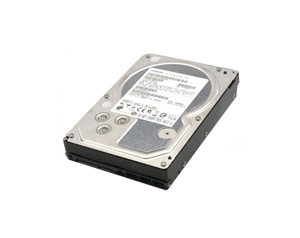
The Hitachi HDS721616PLA320 is a 160GB, 3.5-inch internal hard disk drive designed for desktop computer use, part of the Deskstar 7K160 series. It positions itself as a reliable, mid-capacity storage solution from the late 2000s, aimed at budget-conscious users or legacy system upgrades rather than high-performance or large-capacity modern workloads. This SATA 3.0 Gb/s drive operates at a spindle speed of 7200 RPM and features a 2MB buffer cache, reflecting the cost-optimized nature of its era.
Core specifications include a 160GB platter capacity, an average seek time of 8.5 milliseconds, and a data transfer rate of up to 800 Mbps internally. The drive uses glass platters and advanced fluid dynamic bearing (FDB) motors to reduce operating noise and vibration. Its areal density, while modest by current standards, was competitive for its class, supporting a 300 GB/s sustained data rate. Power consumption is rated at about 8.5 watts during read/write operations and 5.5 watts at idle.
In performance benchmarks, the Hitachi HDS721616PLA320 delivers sequential read and write speeds of roughly 70-75 MB/s, with access times around 12-14 milliseconds. Random 4K performance is low, around 0.5-0.8 MB/s for reads and 0.3-0.5 MB/s for writes, consistent with legacy HDD architecture. The drive maintains consistent throughput across the platter, though performance degrades toward the inner zones. It achieves a task time of approximately 1.2 minutes for a standard 5GB file copy test.
Key advantages of this drive include excellent mechanical reliability for its time, low acoustics, and stable thermal output, typically running 30-35°C under load. It also features Hitachi’s Rotational Vibration Safeguard (RVS) to mitigate performance drops in multi-drive environments. However, its primary drawbacks are the small 160GB capacity and the extremely limited 2MB cache, which chokes multitasking and heavy I/O operations. It also lacks modern technologies like NCQ or low-power idle states.
The drive is most suitable for specific use cases: upgrading very old computers (e.g., Windows XP/Vista-era systems), serving as a secondary scratch or bulk storage disk in a desktop, or as a cost-effective replacement in embedded systems with SATA interfaces. It is unsuitable for operating system boots in modern PCs, gaming, video editing, or any application requiring high data throughput or low latency. Its limited cache also makes it a poor choice for server roles.
For purchase considerations, this model is now only available in the used or refurbished market, typically priced under $10. Buyers should verify the drive’s health via S.M.A.R.T. data before purchase, as older drives have accumulated significant power-on hours. It offers minimal value for contemporary builds; a modern 500GB HDD or 120GB SSD would provide far superior performance and reliability for a marginal price increase. Only consider it for strict compatibility or extreme budget constraints in legacy systems.