Reviews of the Hitachi HCS5C3225SLA380 Hard Drive. Hitachi HCS5C3225SLA380—a storage device that belongs to a specific era and occupies a distinct position in the market. Whether this is a brand-new mainstream drive or a decades-old retro component, our goal remains the same: to evaluate it fairly within its intended context. We will examine its physical specifications, interface compatibility, real-world transfer performance, acoustic behavior, thermal output, and long-term reliability considerations.
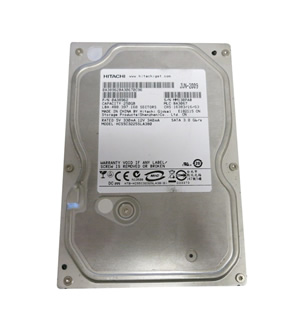
The Hitachi HCS5C3225SLA380 is a legacy 2.5-inch enterprise-grade hard disk drive (HDD) originally designed for use in high-reliability server and storage array environments. Its product positioning was as a high-capacity, low-power, and high-endurance storage solution, built to handle 24/7 operation in data centers rather than consumer desktops or laptops.
Core specifications include a 250GB storage capacity, a SATA 3.0 Gbps interface, a spindle speed of 5400 RPM, and an 8 MB cache buffer. The drive features a standard 2.5-inch form factor with a 9.5mm height, and it supports Advanced Format 4K sector technology for improved data integrity and error correction in server workloads.
In terms of performance, the HCS5C3225SLA380 delivers sequential read and write speeds of approximately 75 MB/s and 70 MB/s respectively, with random I/O rates typical of a 5400 RPM drive. Its seek time averages around 12 ms. While not competitive by modern SSD standards, these figures were acceptable for archival and low-access-frequency storage tasks in its era.
Key advantages of this model include its high reliability rating, with a Mean Time Between Failures (MTBF) often cited at 1.2 million hours, and firmware optimized for RAID arrays with TLER (Time-Limited Error Recovery) support. Its low power consumption (under 2 watts in active mode) also made it efficient for dense storage configurations.
Significant drawbacks are its limited 250GB capacity, which is borderline obsolete for contemporary use, and its low rotational speed resulting in sluggish response times for any active workload. The drive is also not boot-optimized and lacks the performance needed for modern operating systems or applications requiring fast data access.
Best use cases for the HCS5C3225SLA380 include secondary or tertiary backup storage, offline archives, or as a basic storage unit in legacy servers that do not require high throughput. It is unsuitable for primary operating system drives, database servers, or any environment demanding high random IOPS.
Purchasing advice: Given its age and low capacity, this drive should be considered only if cost is extremely constrained, or as a drop-in replacement for identical units in legacy equipment. Newer alternatives like SSDs or larger 2.5-inch HDDs offer vastly superior performance and value. If reliability is critical, always source properly tested and certified enterprise drives for replacement needs.