Reviews of the Fujitsu MJA2120BH Hard Drive. Fujitsu MJA2120BH—a storage device that belongs to a specific era and occupies a distinct position in the market. Whether this is a brand-new mainstream drive or a decades-old retro component, our goal remains the same: to evaluate it fairly within its intended context. We will examine its physical specifications, interface compatibility, real-world transfer performance, acoustic behavior, thermal output, and long-term reliability considerations.
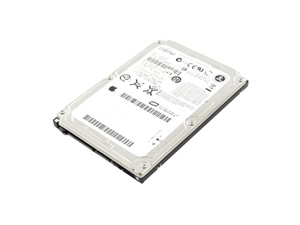
The Fujitsu MJA2120BH is a 2.5-inch SATA hard disk drive primarily designed for use in notebook computers, external storage enclosures, and other compact consumer electronics. It features a 120GB storage capacity, a 5400 RPM spindle speed, and an 8MB buffer, positioning it as a budget-friendly, storage-focused component rather than a high-performance solution.
Core specifications include an areal density that yields the 120GB platter(s), a SATA 3.0 Gbps interface, and a typical operating shock rating around 200G for 2ms. Average seek time is rated at approximately 12ms for read and 13ms for write operations. The physical dimensions follow the standard 9.5mm Z-height for 2.5-inch drives, ensuring compatibility with most mainstream laptops.
In terms of sequential performance, the MJA2120BH achieves sustained read speeds of roughly 40-55 MB/s and write speeds slightly lower due to the 5400 RPM rotational latency. Random access performance is modest, with IOPS figures typical for its class. It runs relatively cool under moderate workloads, with power consumption around 1.8W during read/write operations and about 0.6W when idle.
Strengths include low power draw, quiet acoustic signature during operation (rated around 23 dBA idle), and reliable basic functionality for old or secondary systems. Weaknesses are pronounced when compared to modern drives: slow boot times, noticeable seek delays when multitasking, and low storage density relative to contemporary 1TB+ per platter designs. It lacks self-encrypting drive (SED) or advanced format (4K sector) support.
Performance benchmarks show this drive falling short for demanding tasks such as 1080p video editing, large file transfers, or running multiple virtual machines. It handles typical office applications, document editing, and web browsing adequately, provided the system has sufficient RAM to buffer disk request queues. Cache performance is minimal, so repeated file access does not see significant acceleration.
This drive is best suited for data archival, as a swap disk in older systems where capacity (120GB) is sufficient, or for use in low-cost digital video recorders (DVRs) and embedded systems. It is not recommended for primary OS duty in any modern laptop unless no other option exists, due to the severe performance bottleneck relative to SSDs or newer 7200 RPM HDDs.
For purchase decisions, the MJA2120BH should only be considered if you require a very low-cost, used or NOS (new old stock) replacement HDD for a legacy device. Modern alternatives like any SATA SSD (even a 120GB model) will provide dramatically better responsiveness, durability, and power efficiency. If budget is ultra-constrained and capacity is not critical, this drive can function, but buyer should expect a degraded user experience compared to current storage standards.
In conclusion, the Fujitsu MJA2120BH is a dated yet functional HDD that meets the basic needs of 2008-2012 era laptops. Its quiet operation and low power are its only modern virtues, while its speed and capacity are severely outdated. Owners of such systems may find it a stop-gap solution, but for any new build or upgrade, a solid-state drive is overwhelmingly recommended for day-to-day usability.