Reviews of the Samsung HD253GJ Hard Drive. Samsung HD253GJ—a storage device that belongs to a specific era and occupies a distinct position in the market. Whether this is a brand-new mainstream drive or a decades-old retro component, our goal remains the same: to evaluate it fairly within its intended context. We will examine its physical specifications, interface compatibility, real-world transfer performance, acoustic behavior, thermal output, and long-term reliability considerations.
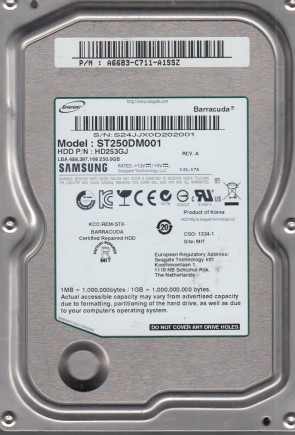
The Samsung HD253GJ is a 250GB hard disk drive from Samsung’s older Spinpoint series, designed as a budget-friendly storage solution for desktop computers. It features a 3.5-inch form factor, a SATA 3.0 Gb/s interface, and a 7200 RPM spindle speed, positioning it as a standard performer for everyday computing tasks rather than high-end or server-grade use. Its core purpose is to provide reliable mass storage for operating systems, applications, and user files at a low cost per gigabyte.
In terms of core specifications, the drive has a 250GB capacity, an 8MB cache buffer, and an average seek time of approximately 8.9 ms. It uses conventional perpendicular magnetic recording technology and does not include advanced features like self-encrypting drives or large cache sizes found in modern models. The HD253GJ connects via a standard SATA power and data connector, making it compatible with most older desktop motherboards.
Performance-wise, the HD253GJ delivers sequential read and write speeds around 70-90 MB/s under ideal conditions, which was competitive for its time but is significantly slower than modern 7200 RPM drives or any SSD. Sustained transfer rates drop after the outer tracks, and the 8MB cache limits burst performance. Random access times are acceptable for basic file operations, but the drive struggles with heavy multitasking or large file transfers due to its mechanical nature and limited caching.
The primary advantage of this drive is its low cost and quiet operation, as Samsung designed it with fluid dynamic bearings to reduce noise and vibration. It also shows decent power efficiency for a 7200 RPM HDD, drawing around 6-8 watts during active use. However, its small cache, modest data density, and reliance on older technology mean it cannot match the speed of modern HDDs or any SSD. Physical shocks and wear over time remain inherent risks for all mechanical drives.
This drive is best suited for older desktop systems needing a secondary storage drive for documents, media files, or backup purposes. It can also serve as a low-cost option for retro builds or temporary storage where speed is not critical. It is not recommended as a primary OS drive due to boot and application load times being noticeably slower than SSDs or newer HDDs with larger caches.
Purchasing a used or new-old-stock HD253GJ today requires caution: the drive may have accumulated significant power-on hours if pre-owned, and warranty support is likely expired. For new builds, a 250GB SSD or a larger modern HDD offers far better performance and reliability. Only consider this unit for legacy system upgrades where compatibility with older hardware or extremely limited budgets are the primary constraints.