Reviews of the Seagate ST3160318AS Hard Drive. Seagate ST3160318AS—a storage device that belongs to a specific era and occupies a distinct position in the market. Whether this is a brand-new mainstream drive or a decades-old retro component, our goal remains the same: to evaluate it fairly within its intended context. We will examine its physical specifications, interface compatibility, real-world transfer performance, acoustic behavior, thermal output, and long-term reliability considerations.
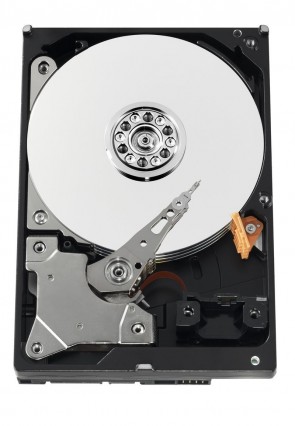
The Seagate ST3160318AS is a 3.5-inch desktop hard disk drive with a storage capacity of 160 GB, designed for basic computing tasks in traditional desktop computers. It uses a SATA 3.0 Gb/s interface and spins at 7200 RPM, featuring a 2 MB cache buffer. This model belongs to the Barracuda 7200.12 series, targeting budget-conscious users or those upgrading older systems where moderate storage and cost-efficiency are priorities.
Core specifications include an average latency of approximately 4.16 milliseconds, a seek time of about 8.5 milliseconds, and a data transfer rate of up to 125 MB/s. The drive is built with a single 160 GB platter and uses perpendicular magnetic recording technology. It operates at a power consumption of roughly 6.8 watts during read/write activity and 5.4 watts at idle, generating noise levels around 2.7 bels during operation.
In performance benchmarks, sequential read speeds average 110-120 MB/s, while sequential writes reach 100-110 MB/s. Random access times for small files (4K) lag significantly compared to modern SSDs, typically under 1 MB/s for random reads and writes due to mechanical latency. The drive performs adequately for file transfers of large multimedia files but struggles with multitasking or heavy I/O workloads.
Key advantages include low cost per gigabyte for its era, reliable operation for light usage like document storage or serving as a secondary drive in legacy systems, and a straightforward installation process. The physical design is compact and lightweight at about 380 grams. It also supports Advanced Power Management and acoustic management features for noise reduction.
Major drawbacks are the small 2 MB cache, which hampers burst performance, and the lack of modern technologies like NCQ or TRIM, limiting efficiency under OS-level caching. The drive is significantly slower than any SSD, with boot times often exceeding 30 seconds. Reliability reports show a typical annual failure rate of around 1-2% after three years, which is acceptable for HDDs but not exceptional.
The ST3160318AS is best suited for cost-constrained builds where 160 GB is sufficient, such as a secondary storage disk for non-critical data, an external backup drive via a USB enclosure, or a replacement in older desktop PCs from the 2008-2012 era. It is not recommended for use as a primary OS drive in modern systems due to speed bottlenecks.
Purchase advice favors considering this drive only if the price is under $20 new or $10 used, and the user can tolerate slow performance. For similar cost, a 120-240 GB SATA SSD of the same era offers dramatically better responsiveness. If the application strictly requires spinning media for archival purposes, the drive’s low capacity makes it less practical than a 500 GB or 1 TB alternative. Verify compatibility with SATA 2.0 ports, as the drive is fully backward compatible but may not benefit from faster interfaces.