Reviews of the Seagate ST3400820SCE Hard Drive. Seagate ST3400820SCE—a storage device that belongs to a specific era and occupies a distinct position in the market. Whether this is a brand-new mainstream drive or a decades-old retro component, our goal remains the same: to evaluate it fairly within its intended context. We will examine its physical specifications, interface compatibility, real-world transfer performance, acoustic behavior, thermal output, and long-term reliability considerations.
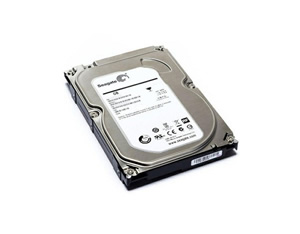
The Seagate ST3400820SCE is a third-generation 3.5-inch enterprise SAS hard disk drive designed for high-reliability data storage environments. It positions itself as a workhorse for server racks and storage arrays where continuous operation and data integrity are prioritized over raw capacity or speed. With a 400GB formatted capacity and a 10,000 RPM spindle speed, it targets legacy server upgrades or bulk storage tasks where flash storage is not cost-effective.
Core specifications include a 16MB cache buffer, a native 3Gb/s SAS interface, and a typical areal density that delivers sequential read speeds around 90 MB/s and write speeds near 85 MB/s under optimal conditions. The drive features a mean time between failures of 1.2 million hours and operates with a 12ms average seek time for reads. It is a 3.5-inch form factor, consuming approximately 8.0 watts during active operation and 6.1 watts at idle.
In performance benchmarks, the ST3400820SCE exhibits consistent throughput for large file transfers, but random I/O operations are limited by the rotating platters and relatively small cache. Sustained sequential performance is adequate for video streaming or backup tasks, while 4K random read/write latencies remain in the 10-15ms range. The drive does not compete with modern 15k RPM enterprise drives or SATA SSDs in transactional workloads.
Key advantages include robust build quality with a 24/7 duty cycle rating, power-loss protection, and a mature firmware stack proven in thousands of enterprise deployments. Its SAS interface supports dual-port failover, which improves reliability in redundant storage configurations. The primary disadvantages are low capacity compared to modern 2TB+ hard drives, outdated sequential speeds, and high noise levels at 3.2 bel when seeking. The drive also runs relatively warm, requiring adequate chassis ventilation.
Best use cases include secondary archival storage in SAS-based NAS systems, boot drives for older servers that lack SATA controllers, or as replacement parts in existing arrays where drive model consistency is mandatory. It is not suitable for high-frequency transaction processing, virtualization hosts, or environments requiring SSD-like response times. The 400GB capacity is also limiting for modern data-intensive applications.
Purchasing advice: buy this drive only if you need a drop-in replacement for a legacy SAS system that requires identical form, fit, and function. For new builds, opt for at least a 15k RPM SAS drive or a cost-competitive SATA SSD for better performance and capacity. Used or refurbished units are widely available at low cost, but verify vendor certification to avoid drives with high power-on hours. Expect an endurance of 1.2 million hours MTBF, but real-world lifespan can exceed 5 years under controlled enterprise conditions.
Overall, the ST3400820SCE is a dated but dependable component for specific enterprise use cases. Its reliability and interface compatibility give it a narrow niche, but most users will find better value in modern hard drives or solid-state alternatives. Evaluate your storage controller and workload requirements carefully before purchasing, and always maintain redundant backups regardless of drive age.
