Reviews of the Maxtor 6L040J2 Hard Drive. Maxtor 6L040J2—a storage device that belongs to a specific era and occupies a distinct position in the market. Whether this is a brand-new mainstream drive or a decades-old retro component, our goal remains the same: to evaluate it fairly within its intended context. We will examine its physical specifications, interface compatibility, real-world transfer performance, acoustic behavior, thermal output, and long-term reliability considerations.
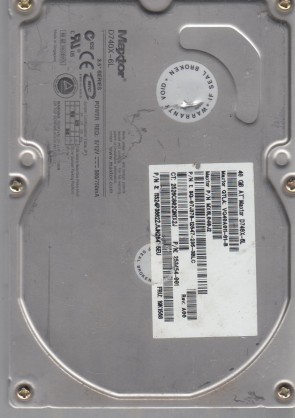
The Maxtor 6L040J2 is a 40GB hard disk drive from the early 2000s, designed as a mainstream storage solution for desktop personal computers. It utilizes the parallel ATA (PATA/IDE) interface, which was the standard connection for internal drives before the adoption of SATA. Its primary product positioning was to offer a cost-effective balance of capacity and performance for general home and office use, fitting into systems that required reliable secondary storage or a primary boot drive for operating systems of that era.
Core specifications include a 40GB formatted storage capacity, a 7200 RPM spindle speed, and a 2MB cache buffer. The drive uses a single-platter design, which contributed to its relatively lightweight construction. It employs the Ultra ATA/133 interface, offering a theoretical maximum data transfer rate of 133 MB/s, though real-world sustained transfer rates were lower, typically ranging from 30 to 50 MB/s. The average seek time was rated around 9 milliseconds, which was competitive for its time.
In performance benchmarks, the 6L040J2 delivered adequate sequential read and write speeds for everyday tasks like file copying and application loading. It performed well in single-user desktop scenarios, but cache size limited performance in multi-tasking or heavy sequential workloads. Random access times were decent for the period, but compared to later drives with larger caches or perpendicular recording, it showed slower response times. Idle noise was moderate, with a characteristic hum, and while seek acoustics were noticeable, they were not intrusive.
Advantages of this drive include its proven reliability and robustness under continuous use, making it a common choice for older systems that are still functional. The 7200 RPM spindle provides a noticeable speed improvement over earlier 5400 RPM drives. Its low cost per gigabyte when new made it attractive for users seeking to upgrade from smaller drives. Additionally, its PATA interface ensures compatibility with a vast number of legacy motherboards and systems.
Disadvantages are significant by modern standards. The primary limitation is its small capacity, which is insufficient for today’s operating systems, large applications, or media libraries. The parallel ATA interface uses wide cables that impede airflow inside cases, and the drive lacks modern features like NCQ (Native Command Queuing) or S.M.A.R.T. monitoring with advanced error recovery. Performance in modern multi-threaded environments is poor, and sustained read/write speeds are far below even entry-level SATA drives.
The Maxtor 6L040J2 is best suited for use in retro computing projects, preservation of legacy systems (e.g., Windows 98/XP PCs), or as a temporary storage device for data recovery tasks from older computers. It can also serve as a secondary drive in a classic system for storing period-appropriate software or games. It is not recommended for modern daily use, high-performance computing, or any application requiring fast data access.
For purchase, this drive is primarily found on second-hand markets, salvage shops, or as a part of decommissioned office equipment. Given its age, buyers should anticipate a higher risk of mechanical failure due to worn bearings or motor fatigue. It is advised to test the drive thoroughly using utility tools, check for reallocated sectors, and verify the read/write speeds before relying on it for data storage. For most users, a modern SATA SSD or HDD is a far more practical and reliable alternative.
In summary, the Maxtor 6L040J2 was a competent mainstream drive in its day, offering decent performance for early-2000s desktop computing. While obsolete for modern workloads, it retains niche value for enthusiasts and retro hardware collectors. Its reliability record is fair for its age, but users should treat it as a fragile vintage component. The decision to purchase should be based on specific need for legacy compatibility and willingness to manage its inherent limitations.