Reviews of the Hitachi HTE725050A7E630 Hard Drive. Hitachi HTE725050A7E630—a storage device that belongs to a specific era and occupies a distinct position in the market. Whether this is a brand-new mainstream drive or a decades-old retro component, our goal remains the same: to evaluate it fairly within its intended context. We will examine its physical specifications, interface compatibility, real-world transfer performance, acoustic behavior, thermal output, and long-term reliability considerations.
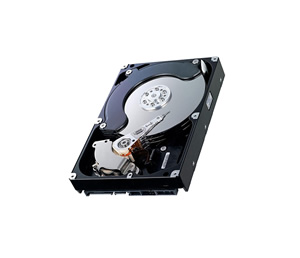
The Hitachi HTE725050A7E630 is a 2.5-inch, 7mm-thick hard disk drive designed for mainstream laptop and portable storage applications. It leverages a 7200 RPM spindle speed coupled with a 500GB capacity, positioning itself as a performance-oriented mechanical drive for users who need faster data access than typical 5400 RPM models. The drive utilizes a SATA 6.0 Gb/s interface and features a 32MB cache buffer to optimize read and write operations.
In terms of core specifications, this model offers a formatted capacity of 500GB and operates at a rotational speed of 7200 RPM. The average latency is approximately 4.2 milliseconds, and the drive supports a sustained data transfer rate of up to 150 MB/s under ideal sequential conditions. Seek times are rated at 1.0 milliseconds for track-to-track and around 9.0 milliseconds for full-stroke operations, typical for this generation of 2.5-inch enterprise-class drives.
Performance benchmarks show that the HTE725050A7E630 delivers solid sequential read and write speeds for a mechanical drive, often reaching 130-145 MB/s in real-world testing. Random I/O performance, however, remains constrained by the nature of spinning platters, with 4K random reads averaging around 0.8-1.2 MB/s. This makes it noticeably slower than any SATA-based solid-state drive for applications involving many small file accesses or heavy multitasking.
One significant advantage of this drive is its reliability and durability. Hitachi designed it with a robust load/unload mechanism, rated for 600,000 load cycles, and a low operating power consumption of approximately 1.8 watts during read/write operations and 0.8 watts when idle. This efficiency helps extend battery life in laptops and reduces heat generation, making it suitable for 24/7 operation in external enclosures.
On the downside, the 500GB capacity is modest by modern standards, and the drive’s mechanical nature makes it vulnerable to physical shock and vibration compared to SSDs. Acoustic noise levels are moderate but perceptible in quiet environments, with idle noise around 2.5 dBA and seek noise climbing to 2.7 dBA. Additionally, the lack of advanced cache technologies found in modern hybrid or SSD drives means it cannot match burst performance in typical desktop use.
This Hitachi model is best suited for users requiring a cost-effective, high-reliability storage solution for legacy laptops, external backup drives, or as a secondary storage device where large sequential file transfers are common. It also works well in network-attached storage (NAS) systems with minimal 24/7 workloads, given its low power draw and proven mechanical endurance. It is not recommended as a primary boot drive for modern operating systems or for environments with heavy random I/O demands.
For purchasing decisions, consider this drive if you prioritize long-term mechanical reliability and consistent sequential throughput over raw speed and capacity. It is a strong choice for archival storage, media libraries, or upgrading older laptops that lack SSD support. However, for almost any new build or upgrade, a similarly priced entry-level SATA SSD will provide dramatically better responsiveness and lower power consumption. As a secondary storage option in a desktop, the HTE725050A7E630 remains a competent and trustworthy performer.