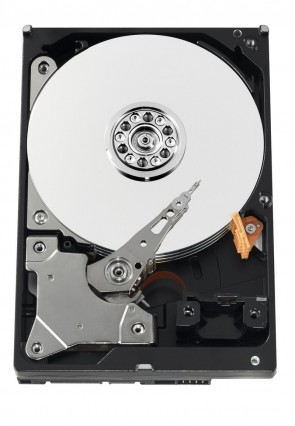
Maxtor 8J147S0 3.5″ hard drive with a storage capacity of 147 GB and featuring a Serial ATA interface. Maxtor 8J147S0 DiamondMax 16 147 GB 3.5″ Internal Hard Drive Serial ATA-150 5400 RPM 8 MB Buffer.
All information about the Maxtor 8J147S0 hard disk drive: technical parameters, failure symptoms, frequently asked questions, reviews, HDD repair and data recovery.

Maxtor 8J147S0 Technical Details:
Note: The Maxtor 8J147S0 is part of the DiamondMax 16 series, released around 2004-2005. This series represented Maxtor’s transition from IDE/PATA to SATA interfaces in the desktop storage market. The DiamondMax 16 series featured 5400 RPM spindle speed with 8 MB cache and was designed for mainstream desktop systems, offering capacities up to 300 GB. The “16” in the name refers to the 16th generation of Maxtor’s DiamondMax family.
Maxtor 8J147S0 Hard Drives:
- 8J147S0 – 147 GB SATA 3.5″ Hard Drive, DiamondMax 16 series
- Model code breakdown: 8 (DiamondMax 16 series) + J (SATA interface) + 147 (147 GB capacity) + S0 (SATA, 8 MB cache variant)
- Common firmware revisions: BAJ41G20, BAJ41G2A
- Capacity in LBA: 287,304,255 sectors (approximately)
- Also known as: Maxtor 6J147S0 (OEM variant)
Maxtor 8J147S0 Failure Symptoms:
Electrical Failure Symptoms:
- Drive is powered, but shows no sign of function;
- Disk knocking as the motor fails to spin;
- Clicking sound as the heads search or initialize;
- Burnt components on PCB – particularly TVS diodes or the motor controller IC.
Mechanical Failure Symptoms:
- Clicking, grinding sounds (head/media damage);
- Completely quiet due to “motor freeze” (bearing seizure);
- Drive spins but produces rhythmic clicking – typical of head failure;
- Occasional “scraping” sound indicating platter damage.
Logical Failure Examples:
- Accidental deletion, accidental format, file corruption, software bugs;
- File system corruption, viruses and malware;
- Partition table loss or MBR corruption;
- “SMART” failure warnings from BIOS.
Firmware Failure Symptoms:
- Drive powers up but is not recognised by the computer;
- Drive powers up but is recognised wrongly, sometimes with nonsensical characters;
- Drive freezes during booting up;
- Drive detected with 0 MB capacity (service area corruption).
Bad Platter Area Symptoms:
- Hard disk still accessible but appears to “hang” or be “sluggish”;
- Constant Cyclic Redundancy Check (CRC) errors;
- Unable to access folders or files which could be seen;
- Gradual increase of reallocated sector count in SMART data.
Complex Failure Model
(A combination of two or more of the above failure types)
Maxtor 8J147S0 Data Recovery & HDD Repair:
When it comes to data recovery, one of the most common problems the Maxtor 8J147S0 hard drive experiences is PCB (circuit board) failure due to power surges, followed by firmware corruption and head failure. This drive uses the “Poker” PCB series common to many Maxtor drives of this era.
PCB Replacement Information:
To replace a faulty PCB on a Maxtor 8J147S0, you need to match the following:
- Model number: 8J147S0
- PCB part number: Common numbers include 1465, 1480, 1800 (Poker series)
- Main controller IC number: Often 040108200 or similar
- Firmware revision: e.g., BAJ41G20, BAJ41G2A
⚠️ Critical Note: Unlike Western Digital drives, the Maxtor 8J147S0 does NOT have a separate ROM chip on the PCB. The firmware code is masked inside the main controller (DSP) chip. This means PCB replacement requires an identical donor board – there is no ROM to transfer. Even with a matching PCB, if the drive still clicks, the problem is likely head failure.
Symptom Analysis Based on User Reports:
Repair & Data Recovery Options by Failure Type:
Comparison with Related Maxtor Models:
Frequently Asked Questions (FAQs):
Q: Is the Maxtor 8J147S0 a 3.5″ or 2.5″ drive?
A: It is a 3.5-inch desktop hard drive.
Q: What is the capacity of the 8J147S0?
A: 147 GB (approximately 147,000 MB).
Q: What is the RPM and cache size?
A: 5400 RPM and 8 MB cache.
Q: What interface does the 8J147S0 use?
A: Serial ATA (SATA) with SATA-150 (1.5 Gb/s) support.
Q: What is the DiamondMax 16 series?
A: The DiamondMax 16 series was Maxtor’s mainstream desktop hard drive line released around 2004-2005, marking the company’s transition from IDE/PATA to SATA interfaces. The “16” refers to the 16th generation of the DiamondMax family. The series ranged from 80 GB to 300 GB with 5400 RPM and 8 MB cache.
Q: What does the model number 8J147S0 mean?
A: The model number breaks down as:
– 8 = DiamondMax 16 series
– J = SATA interface
– 147 = 147 GB capacity
– S0 = SATA, 8 MB cache variant
Q: My drive is dead and doesn’t spin. Can I replace the PCB myself?
A: Yes, but with important caveats. You need a donor PCB with:
– Identical model number (8J147S0)
– Identical PCB part number (e.g., 1465, 1480, 1800)
– Identical main controller IC number
– Similar firmware revision
There is no separate ROM chip to transfer – the donor board must be fully compatible. If the drive still clicks or is not detected after PCB swap, the problem is likely head failure.
Q: My 8J147S0 clicks rhythmically and is not detected. What’s wrong?
A: Rhythmic clicking (usually 5-10 clicks followed by motor stop) is a classic symptom of head failure. The heads cannot read the servo tracks or firmware from the platters. This requires a cleanroom head swap performed by a professional data recovery service.
Q: Can I recover data from a 8J147S0 with bad sectors?
A: Yes, you can try using ddrescue on Linux to create a disk image, skipping bad sectors. However, if the drive has physical damage (clicking, grinding), do not run ddrescue – seek professional help immediately.
Q: Is the 8J147S0 compatible with modern operating systems?
A: Yes, because SATA is backward compatible. However, the 147 GB capacity is small by modern standards. This drive is best suited for retro computing projects (Windows XP, early Windows Vista) or as secondary storage in legacy systems.
Q: What are the common firmware issues on this drive?
A: The 8J147S0 can experience Service Area corruption where the drive spins but is not detected or shows 0 MB capacity. This requires professional tools like PC-3000 or MRT to repair modules in the service area.
Q: Is this drive worth buying today?
A: Generally no. This drive is over 15 years old. It may be useful for retro computer builds (Windows XP/early Vista era) as a period-appropriate storage device, but do not use it to store any important data. For data recovery, the 8J147S0 is considered a legacy drive with moderate recovery success rates when handled by professionals.
User Reviews & Summary:
Pros (for its time ~2004):
– SATA interface – forward-looking for the era
– 8 MB cache – good for buffering
– 5400 RPM with 9.3 ms seek time – acceptable for mainstream use
– Maxtor’s DiamondMax line had a strong reputation
Cons (by modern standards):
– 147 GB capacity is modest
– SATA-150 (1.5 Gb/s) is slow by current standards
– No large cache (8 MB vs modern 64-256 MB)
– Parts are difficult to source
– 15+ years old – high probability of failure
Final Verdict:
The Maxtor 8J147S0 (DiamondMax 16 series, 147 GB) represented an important transitional drive for Maxtor, moving from IDE to SATA interfaces in the mainstream desktop market. Released around 2004-2005, it offered capacities up to 147 GB with 5400 RPM and 8 MB cache. While it is now obsolete for modern primary storage, it remains a period-appropriate component for retro Windows XP builds or as secondary storage in legacy systems.
If you still have a working 8J147S0 today, it can be used for retro computing projects but never store irreplaceable data on it. For data recovery from a failed drive, DIY attempts beyond simple logical recovery have low success rates; professional recovery is strongly recommended for valuable data, especially if the drive makes clicking or grinding noises.
Pro Data Recovery Tip: If your 8J147S0 is clicking, do not repeatedly power cycle the drive. Each power cycle may cause the heads to scrape the platters, turning a potentially recoverable case into a hopeless one. Power off immediately and consult a professional data recovery service.